
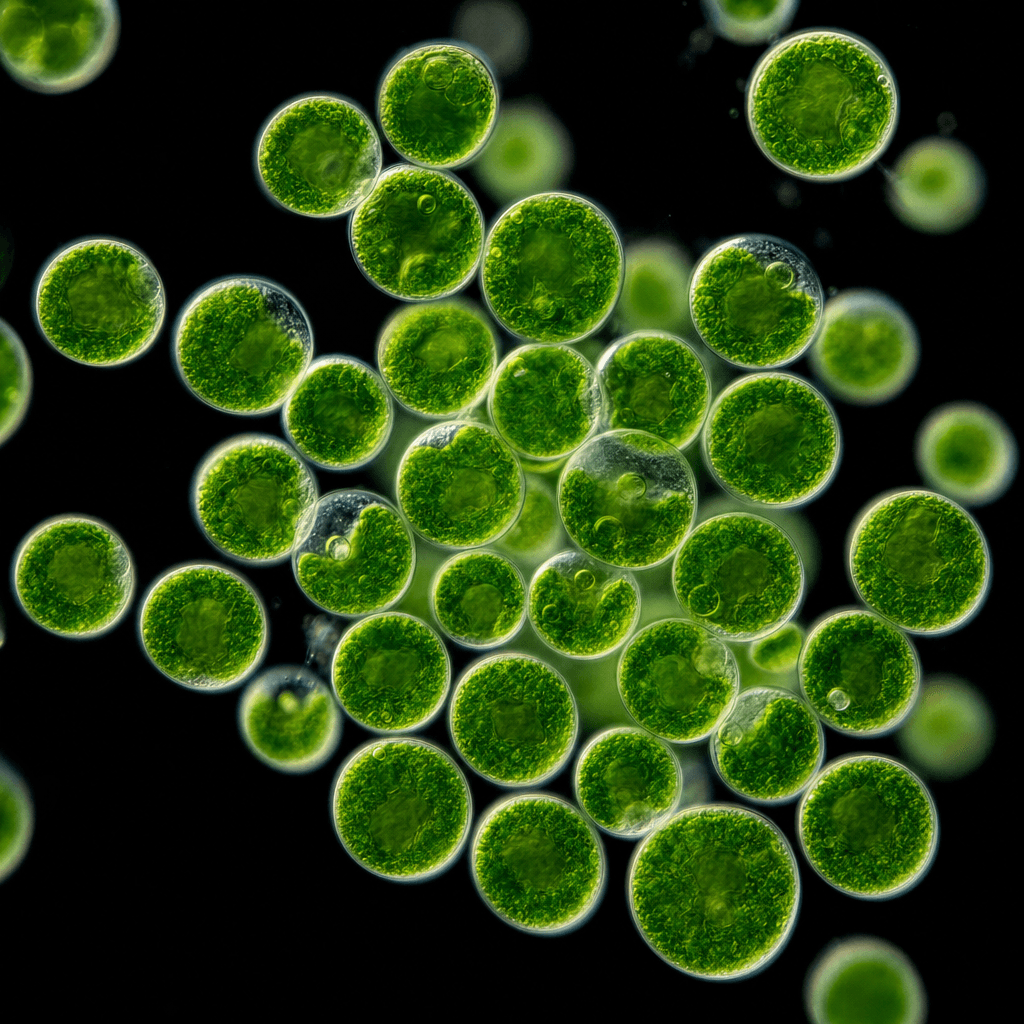
Chlorella is a genus of single-celled freshwater green microalgae, spherical in shape and 2–10 µm in diameter. It is one of the most studied and cultivated microalgae in the world thanks to its fast growth, high protein content and high chlorophyll concentration. It reproduces asexually through autospores.
Characteristics
- ▪Spherical cell of 2–10 µm with a single cup-shaped chloroplast.
- ▪High protein content (≈ 45–60 % of dry weight, depending on cultivation conditions and literature).
- ▪Rich in chlorophyll a and b, carotenoids, vitamins and minerals.
- ▪Fast, robust growth, suitable for intensive cultivation.
Cultivation
It is grown both in open systems (raceway ponds) and in closed photobioreactors, in fresh water with light, CO₂ and nutrients (nitrogen and phosphorus). It tolerates high cell densities, which favours industrial-scale production.
Applications
FAQ
Chlorella is a freshwater microalga; it is grown in fresh, nutrient-enriched media.
Its single cup-shaped chloroplast is highly efficient at capturing light, giving it one of the highest chlorophyll concentrations among known organisms.
Sources
- Richmond, A. & Hu, Q. (eds.) (2013). Handbook of Microalgal Culture: Applied Phycology and Biotechnology. Wiley-Blackwell.
- Spolaore, P. et al. (2006). Commercial applications of microalgae. Journal of Bioscience and Bioengineering, 101(2), 87–96.
- Khan, M.I., Shin, J.H. & Kim, J.D. (2018). The promising future of microalgae: current status, challenges, and optimization of a sustainable and renewable industry for biofuels, feed, and other products. Microbial Cell Factories, 17:36.
Scientific outreach based on specialised literature. Scientific review: pending.