
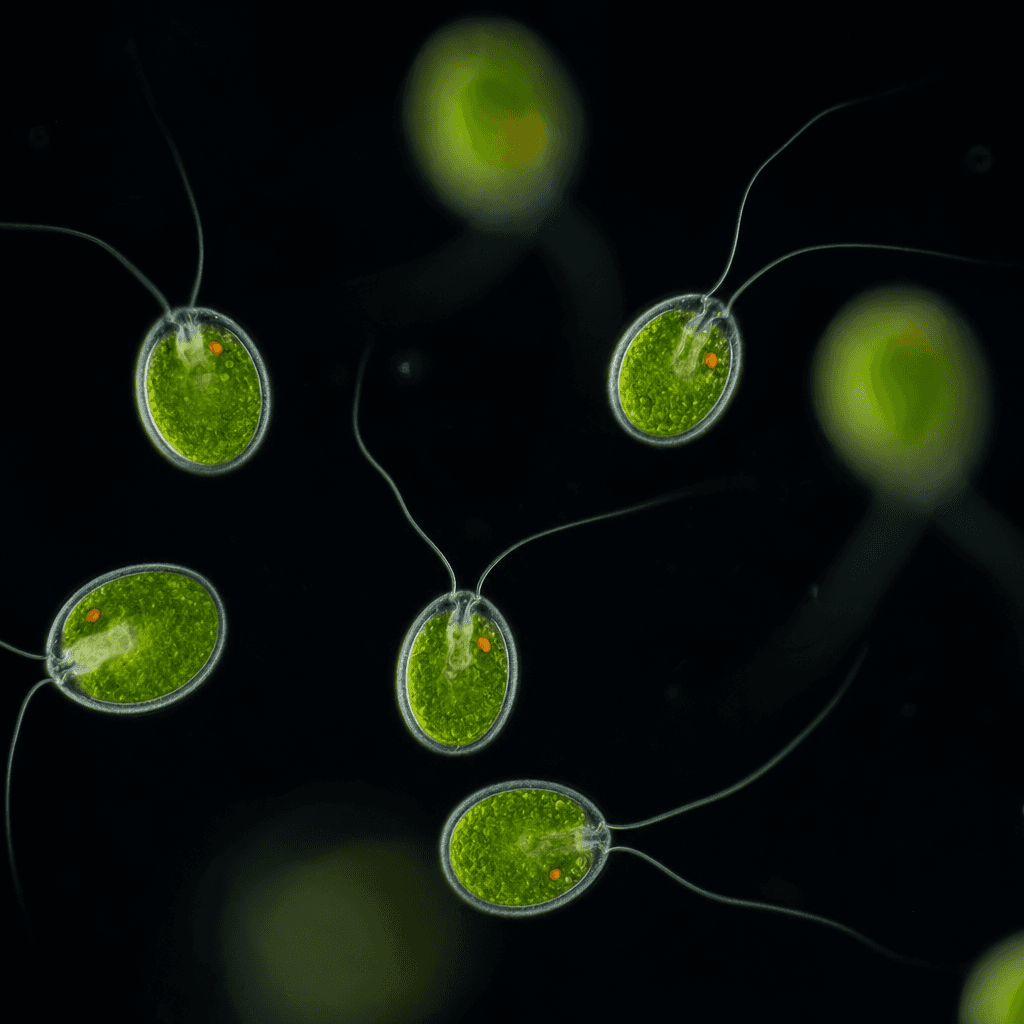
Chlamydomonas reinhardtii is a single-celled freshwater green microalga, biflagellate and about 10 µm. It is one of the most important model organisms in biology: its genome is sequenced and it is easy to grow and modify, making it a reference for studying photosynthesis, motility and algal genetics.
Characteristics
- ▪Cell with two flagella and an eyespot.
- ▪Model organism: sequenced genome.
- ▪Easy to cultivate and genetically transform.
- ▪Able to produce hydrogen under specific conditions.
Cultivation
It is easily grown in defined freshwater media, both in the laboratory (flasks, plates) and in photobioreactors. Its speed and genetic tractability make it ideal for research and bioprocess development.
Applications
Research (photosynthesis, genetics, motility)Recombinant protein productionBioenergy studies (hydrogen)Biotechnology
FAQ
Because its genome is sequenced, it is easy to grow and it can be genetically modified, which allows processes such as photosynthesis to be studied in great detail.
Sources
- Richmond, A. & Hu, Q. (eds.) (2013). Handbook of Microalgal Culture: Applied Phycology and Biotechnology. Wiley-Blackwell.
- Spolaore, P. et al. (2006). Commercial applications of microalgae. Journal of Bioscience and Bioengineering, 101(2), 87–96.
- Khan, M.I., Shin, J.H. & Kim, J.D. (2018). The promising future of microalgae: current status, challenges, and optimization of a sustainable and renewable industry for biofuels, feed, and other products. Microbial Cell Factories, 17:36.
Scientific outreach based on specialised literature. Scientific review: pending.