
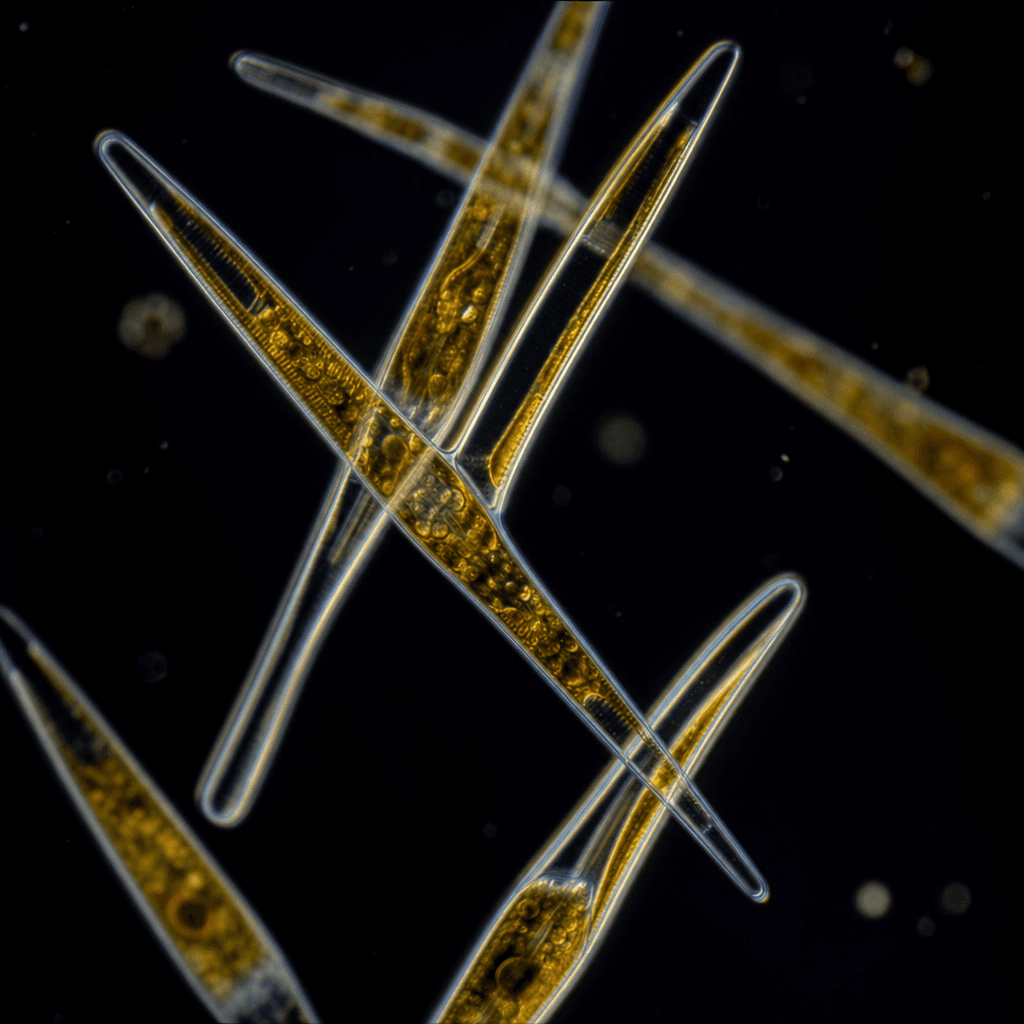
Phaeodactylum tricornutum is a marine diatom and one of the model organisms of the group, with its genome sequenced. It is famous for its pleomorphism: it takes fusiform, triradiate or oval shapes depending on conditions. Its golden-brown chloroplasts contain fucoxanthin, and it is a notable source of EPA (eicosapentaenoic acid, an omega-3).
Characteristics
- ▪Pleomorphic: fusiform, triradiate and oval shapes.
- ▪Golden-brown chloroplasts with fucoxanthin.
- ▪Rich in EPA (omega-3).
- ▪Model organism with a sequenced genome.
Cultivation
It is grown in marine medium in photobioreactors, with fast growth. Its genetic tractability has made it a model for the metabolic engineering of diatoms and the production of lipids and pigments.
Applications
FAQ
It is a brown carotenoid present in diatoms and brown algae, studied for its antioxidant capacity and its interest in nutraceuticals.
Sources
- Richmond, A. & Hu, Q. (eds.) (2013). Handbook of Microalgal Culture: Applied Phycology and Biotechnology. Wiley-Blackwell.
- Spolaore, P. et al. (2006). Commercial applications of microalgae. Journal of Bioscience and Bioengineering, 101(2), 87–96.
- Khan, M.I., Shin, J.H. & Kim, J.D. (2018). The promising future of microalgae: current status, challenges, and optimization of a sustainable and renewable industry for biofuels, feed, and other products. Microbial Cell Factories, 17:36.
Scientific outreach based on specialised literature. Scientific review: pending.