
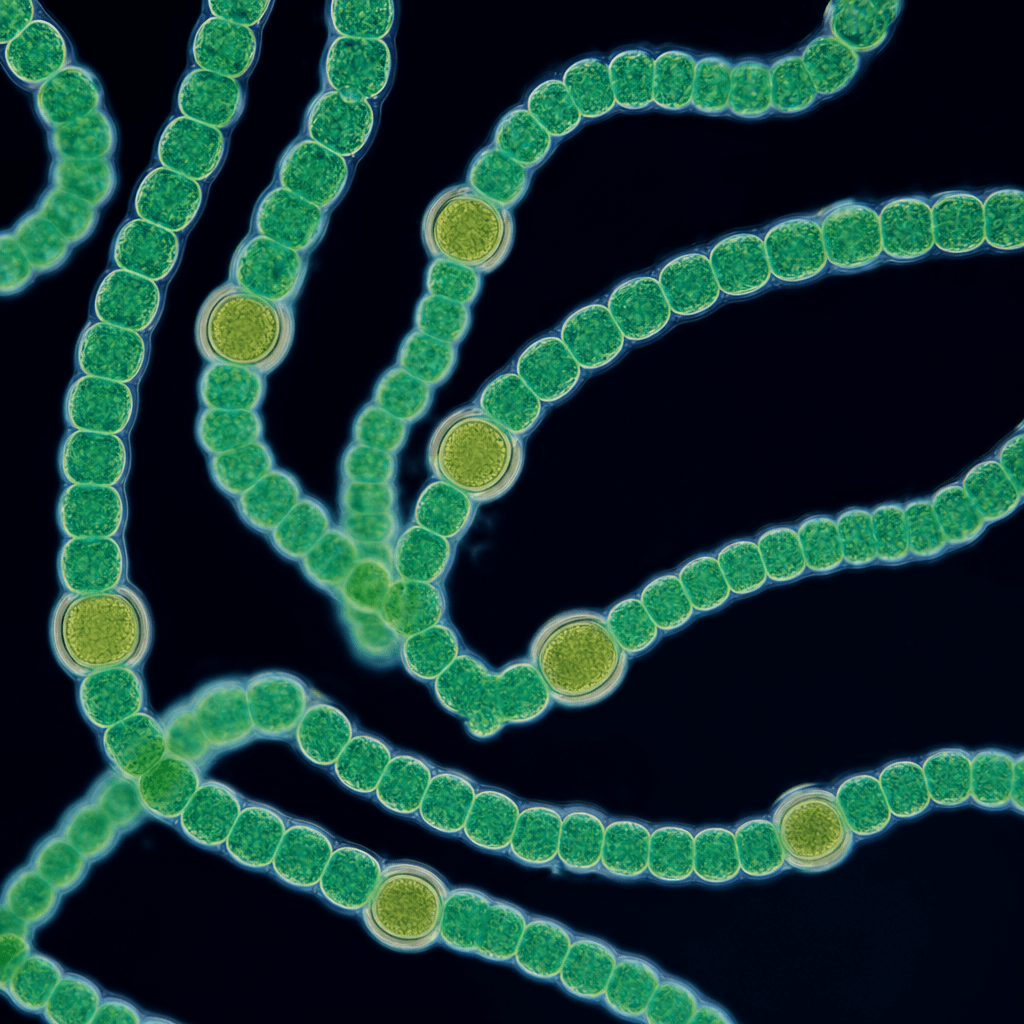
Anabaena is a genus of filamentous freshwater cyanobacteria that form chains of cells (trichomes). Its most characteristic feature is the presence of heterocysts: cells specialised in the biological fixation of atmospheric nitrogen. This ability makes it highly relevant in ecology and biofertilization, for example in the symbiosis with the aquatic fern Azolla in rice paddies.
Characteristics
- ▪Filaments (trichomes) of cells in a chain.
- ▪Heterocysts: cells specialised in fixing nitrogen.
- ▪Forms akinetes (resistant cells) under adverse conditions.
- ▪Biological fixation of atmospheric nitrogen.
Cultivation
It is grown in freshwater media, under conditions that favour nitrogen fixation (media poor in combined nitrogen). In agriculture, its best-known use is the biological fertilization of rice paddies through the Azolla–Anabaena symbiosis. Some strains can produce cyanotoxins, so strain control is important.
Applications
FAQ
It is a specialised cell in some filamentous cyanobacteria, such as Anabaena, where atmospheric nitrogen fixation occurs under oxygen-free conditions.
Because it fixes atmospheric nitrogen and makes it available to plants; its symbiosis with the Azolla fern is used as a biofertilizer in rice paddies.
Sources
- Richmond, A. & Hu, Q. (eds.) (2013). Handbook of Microalgal Culture: Applied Phycology and Biotechnology. Wiley-Blackwell.
- Spolaore, P. et al. (2006). Commercial applications of microalgae. Journal of Bioscience and Bioengineering, 101(2), 87–96.
- Khan, M.I., Shin, J.H. & Kim, J.D. (2018). The promising future of microalgae: current status, challenges, and optimization of a sustainable and renewable industry for biofuels, feed, and other products. Microbial Cell Factories, 17:36.
Scientific outreach based on specialised literature. Scientific review: pending.