
What it is
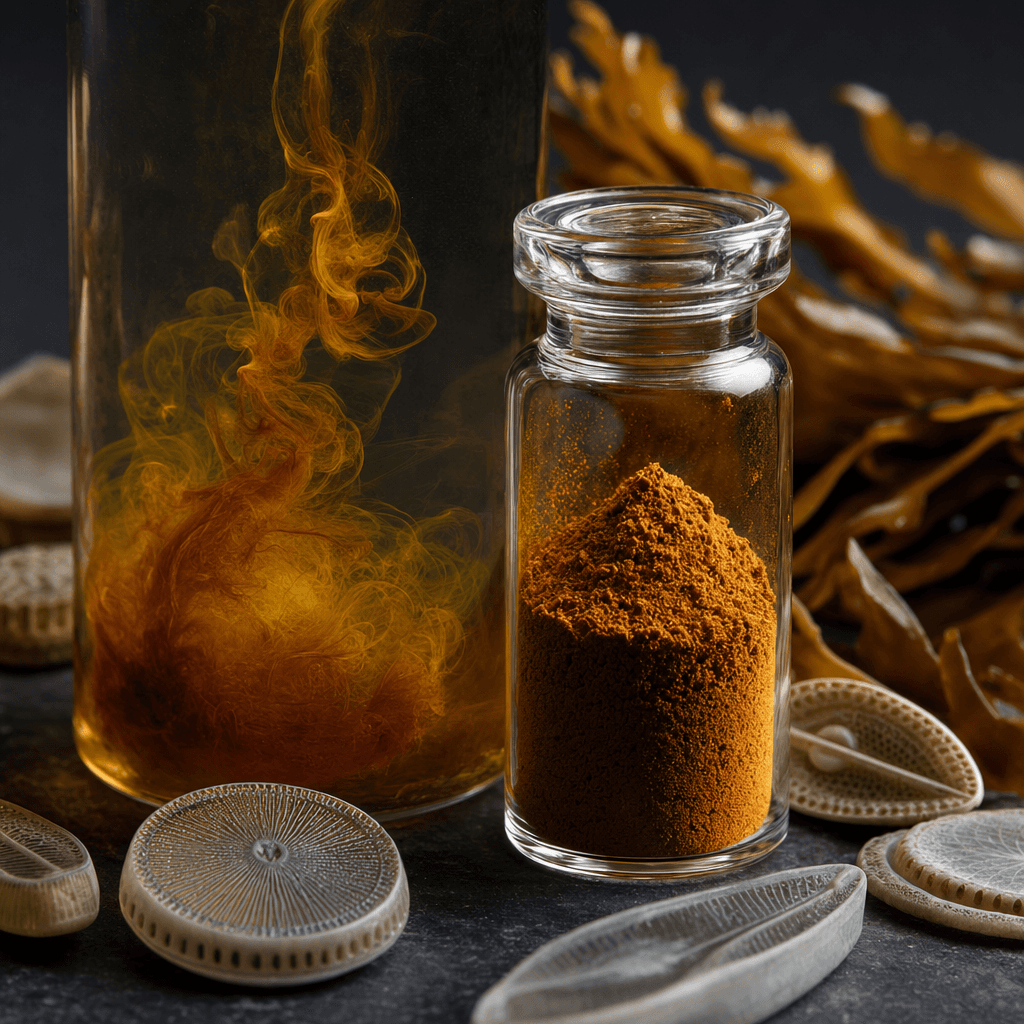
Fucoxanthin is a xanthophyll —an oxygenated carotenoid— with an unusual structure that includes an allenic bond and an epoxide group. It is part of the light-harvesting complexes of diatoms and brown algae, where it accompanies chlorophylls a and c and masks their green colour, giving these organisms their characteristic golden-brown hue. Among cultivable microalgae, the diatom Phaeodactylum tricornutum is one of the most studied sources for its biotechnological production under controlled cultivation. Its commercial interest centres on nutraceuticals, cosmetics and its use as a natural pigment, largely due to its recognised antioxidant activity.
Uses and properties
- ▪Natural antioxidant studied for its ability to neutralise free radicals.
- ▪Naturally sourced carotenoid pigment with a characteristic golden-brown hue.
- ▪Ingredient of interest in nutraceuticals and supplements, studied for its possible relationship with lipid metabolism.
- ▪Component of interest in cosmetics for its antioxidant properties.
FAQ
It is a carotenoid of the xanthophyll group, orange-brown in colour, found in diatoms and brown algae. It takes part in light harvesting for photosynthesis and is known for its antioxidant activity.
It is produced mainly by diatoms. Among cultivable microalgae, Phaeodactylum tricornutum is one of the most studied sources for its production under controlled cultivation.
Because fucoxanthin, with its golden-brown tone, masks the green of the chlorophylls. This pigment is responsible for the characteristic brown colour of these organisms.
It is mainly studied and used in nutraceuticals and supplements, in cosmetics and as a natural pigment, thanks to its antioxidant activity.
Yes. Fucoxanthin is widely studied for its antioxidant capacity, that is, its ability to neutralise free radicals in research assays.
Sources
- Richmond, A. & Hu, Q. (eds.) (2013). Handbook of Microalgal Culture: Applied Phycology and Biotechnology. Wiley-Blackwell.
- Spolaore, P. et al. (2006). Commercial applications of microalgae. Journal of Bioscience and Bioengineering, 101(2), 87–96.
- Khan, M.I., Shin, J.H. & Kim, J.D. (2018). The promising future of microalgae: current status, challenges, and optimization of a sustainable and renewable industry for biofuels, feed, and other products. Microbial Cell Factories, 17:36.